

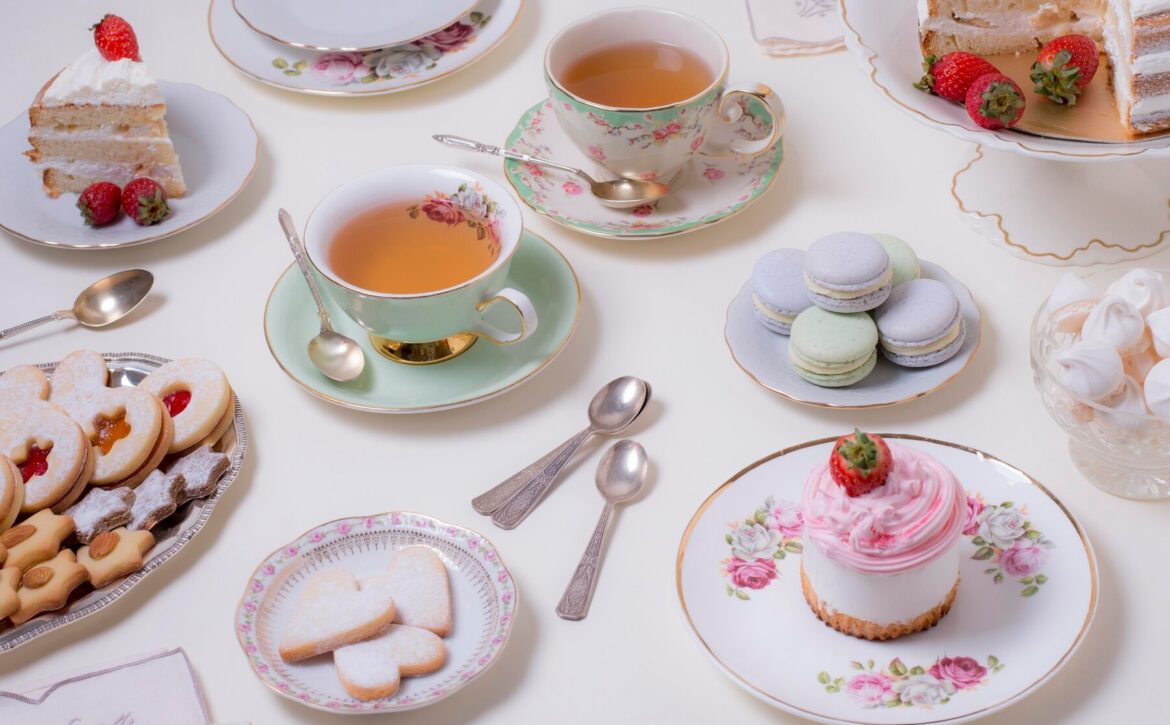
Afternoon Tea vs High Tea: What Is the Difference?
In brief
- Afternoon tea is a light, social service of finger sandwiches, scones and small cakes, taken in the mid-afternoon.
- High tea is traditionally a substantial early-evening meal with hot food, historically associated with working households in northern England and Scotland.
- Many hotels, especially outside the UK, use “high tea” to mean afternoon tea; check the menu.
- A cream tea is the simplest version: tea, scones, clotted cream and jam.
- On a tiered stand, the usual order is savoury first, then scones, then sweet.
The short answer to afternoon tea vs high tea: afternoon tea is a light, social service of finger sandwiches, scones and small cakes, taken in the mid-afternoon. High tea is traditionally a substantial early-evening meal with hot food, eaten at the dining table after the working day. One is a treat between meals; the other is the evening meal. The two are often confused because many hotels, particularly outside Britain, sell afternoon tea under the name “high tea”.
Afternoon tea vs high tea at a glance
Put side by side, the two traditions differ in timing, food, setting and purpose.
| Afternoon tea | High tea | |
|---|---|---|
| When | Mid-afternoon; today usually between about 3 and 5 pm | Early evening, after work; traditionally around 5 to 7 pm |
| Food | Finger sandwiches, scones with clotted cream and jam, small cakes and pastries | Hot, filling dishes: meat, fish, eggs, pies, bread, cheese, followed by cake |
| Setting | Drawing room, garden or hotel lounge; traditionally around low tables | The dining table, seated on proper chairs |
| Purpose | A social occasion and a light bridge to dinner | The main evening meal |
| Historical association | Wealthier households and fashionable society | Working households, particularly in northern England and Scotland |
| Today | An experience offered by hotels and tea rooms | Rarely called by this name at home; in many parts of Britain the evening meal is still simply called “tea” |
What is afternoon tea?
Afternoon tea is a pot of tea served with a selection of small savoury and sweet dishes, usually in the mid-afternoon and usually as a social occasion. Its origin is traditionally credited to Anna, seventh Duchess of Bedford, who is said to have begun taking tea with light refreshments in the afternoon in the 1840s, when the fashionable dinner hour had moved later into the evening. She later invited friends to join her, and the custom spread. Details vary between accounts, but the story explains why afternoon tea is, at heart, an elegant way of bridging the gap between lunch and dinner.
For the longer story of how tea reached Britain and the rest of the world, read our history of tea.
A classic afternoon tea menu
- Sandwiches: thin, crustless and cut into fingers. Cucumber, egg mayonnaise, smoked salmon and ham are classics.
- Scones: plain or fruit, served warm with clotted cream and jam.
- Cakes and pastries: small portions such as tartlets, slices of cake, macarons or seasonal sweets.
- Tea: blends such as Assam or English breakfast for drinking with milk, or lighter teas such as Darjeeling or Earl Grey, often taken plain or with lemon.
What is high tea?
High tea is traditionally a hearty meal eaten at the end of the working day, including hot food. It is usually described as the main evening meal of working families in the industrial north of England and in Scotland, when people came home hungry and there was no separate late dinner. The table might hold cold meats, pies, eggs, fish, bread and butter, cheese and pickles, with cake to finish and tea to drink throughout.
The most common explanation for the name is that high tea was eaten at a high dining table, whereas afternoon tea was served around low tables. The explanation is widely repeated but difficult to document, so treat it as a popular account rather than settled fact.
When a menu says “high tea”
Outside Britain, and in some British hotels too, a service called “high tea” is usually a full afternoon tea: a tiered stand of sandwiches, scones and cakes. This is not a mistake so much as a different use of the term. If you want to know what you will be served, look at the menu when booking.
Cream tea and other variations
Several versions of afternoon tea exist, and they differ mainly in how much food is served.
- Cream tea: tea, scones, clotted cream and jam, nothing else. It is closely associated with Devon and Cornwall in south-west England.
- Full afternoon tea: sandwiches, scones and cakes.
- Champagne afternoon tea: a full afternoon tea with a glass of champagne. Some venues call this a “royal tea”, but naming varies from place to place.
Cream or jam first?
There is no single correct answer. By tradition, Devon puts cream first and jam on top, while Cornwall spreads jam first and finishes with cream. Both are accepted, and the debate is part of the fun. As a guest, follow the way your host serves it.
Order of service: what to eat first on a tiered stand
The usual order is savoury first, then scones, then sweet. You work from sandwiches to cakes, not the other way round.
- Sandwiches: eaten with the fingers, in a few bites.
- Scones: break them in half by hand rather than slicing with a knife. Take some cream and jam onto your plate, then top each piece as you eat it, rather than assembling a sandwich.
- Cakes and pastries: eaten with the fingers or a small cake fork, depending on how delicate they are.
The arrangement of the stand itself varies. Sandwiches are often on the bottom tier, scones in the middle and cakes on top, but many venues bring scones separately so that they stay warm. What matters is the order in which you eat, not the order of the tiers.
Small courtesies at the table
- Hold the cup by the handle between thumb and forefinger rather than hooking your fingers through it.
- Offer the last piece on a shared stand to others before taking it.
- If the teapot stays on the table, offer to pour for those beside you before pouring your own.
Questions about milk first or tea first, the raised little finger, lemon and sugar are covered in our guide to traditional English tea etiquette.
Going out for afternoon tea
A hotel afternoon tea is an occasion, and a little preparation makes it more enjoyable.
- Book ahead. Popular venues often serve afternoon tea in fixed sittings. Ask how long the sitting lasts; around ninety minutes to two hours is common.
- Check the dress code. Some hotels set one for afternoon tea, and sportswear is often not accepted. The venue’s website will usually say. Our dress code guide explains what the common terms mean.
- Ask about the tea. If the list is long, ask for a recommendation, and mention whether you take milk.
- Refills. Many venues will replenish sandwiches or scones on request; if you are unsure, ask.
Hosting afternoon tea at home
At home you do not need an elaborate menu: a few things done well and a carefully laid table are enough.
- Choose the time so that it will not spoil your guests’ evening meal; mid-afternoon usually works.
- Keep the menu simple. Three kinds of sandwich, scones and two sweet items make a complete tea. Ask about dietary needs in advance.
- Make sandwiches close to serving time and cover them with a damp cloth so the bread does not dry out.
- Serve scones warm. Freshly baked or gently reheated scones are the highlight.
- Brew in a pot. Warm the pot first, and offer hot water, milk, sugar and lemon separately so everyone can take their tea as they like it.
Here in Istanbul, many hotels and tea rooms offer an English-style afternoon tea, and the Turkish tradition of the beş çayı, or “five o’clock tea”, serves a similar social purpose. If you would like to practise brewing, pouring and the order of service in person, our British Tea Tradition training covers each step.
Frequently Asked Questions
What is the difference between afternoon tea and high tea?
Afternoon tea is a light, social occasion in the mid-afternoon: finger sandwiches, scones with clotted cream and jam, and small cakes, served with pots of tea. High tea is traditionally a substantial early-evening meal eaten at the dining table after work, with hot dishes such as meat, pies or eggs, bread and cake. One is a treat between meals; the other is the evening meal itself.
What time is afternoon tea served?
Traditionally it filled the long gap between lunch and a late dinner. Today hotels and tea rooms typically serve it between about 2 or 3 pm and 5 pm, often in fixed sittings, though there is no strict rule. If you host at home, choose a time that will not spoil your guests’ evening meal, usually mid-afternoon.
What is a cream tea?
A cream tea is a pared-down afternoon tea: a pot of tea with scones, clotted cream and jam, usually strawberry. There are no sandwiches or cakes. It is closely associated with Devon and Cornwall in south-west England, where the two counties are said to disagree about whether the cream or the jam goes on first.
Is it cream or jam first on a scone?
There is no single correct answer. By tradition, Devon puts the cream on first and the jam on top, while Cornwall puts jam first and cream on top. Both are accepted. As a guest, follow the way your host or the tea room serves it. What matters more is breaking the scone by hand and topping each piece as you eat it.
Why is it called high tea?
The explanation most often given is that high tea was eaten at a high dining table on proper chairs, while afternoon tea was served around low tables in a drawing room. It is widely repeated but hard to document with certainty, so it is best treated as a popular explanation rather than established fact.
Would you like to host or attend afternoon tea with complete confidence? From brewing and pouring to the order of service, our British Tea Tradition training covers every detail, in Istanbul or online.


 TR
 EN